Nature M-S
Nature Quotes M-S. For other pages, click the links below
I wondered over again for the hundredth time what could be the principle which, in the wildest, most lawless, fantastically chaotic, apparently capricious work of Nature, always kept it beautiful.
George MacDonald (1824-1905) – Annals of a Quiet Neighborhood, 1871, p211
In Nature everything has a meaning; that is, every object is exactly adapted to the place it occupies, and to the purpose for which it was made.
Solomon Caesar Malan (1812-1894) – Aphorisums on Drawing IV, Longman, Brown, Green, London, 1856, p. 5.
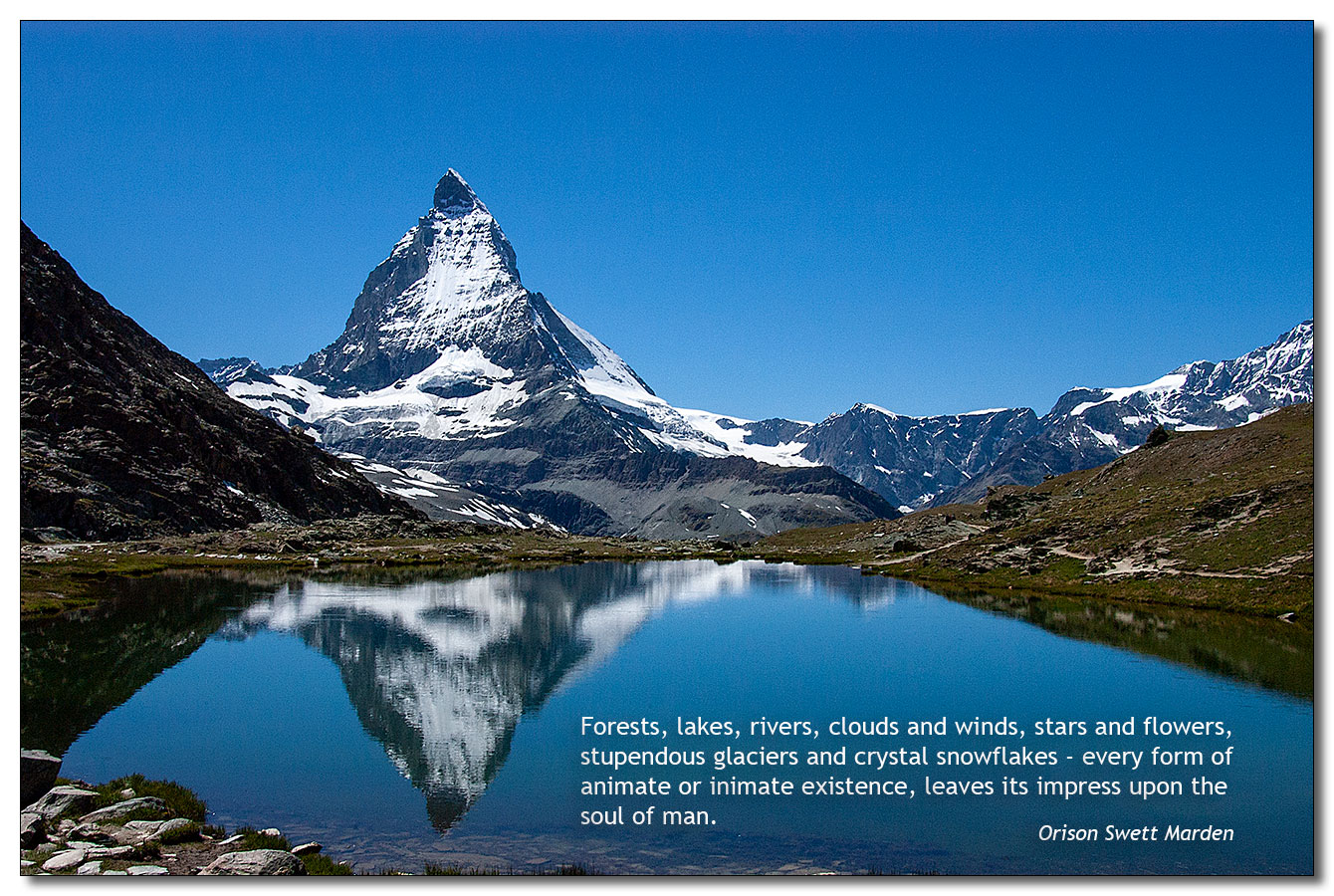
The universe is one great kindergarten for man. Everything that exists has brought with it its own peculiar lesson. Forests, lakes, and rivers, clouds and winds, stars and flowers, stupendous glaciers and crystal snowflakes – every form of animate or inanimate existence, leaves its impress upon the soul of man.
Orison Swett Marden (1850-1924) “Our Schools and Schoolmasters,” Rising in the World or, Architects of Fate, The Success Company, NY, 1897, p424.
Gallery of Nature Quotes
It is absolutely impossible to transcend the laws of nature. What can change in historically different circumstances is only the form in which these laws expose themselves.
Karl Marx (1818-1883) – Letter to Engels, 1868 Quoted in: The Philosophical Foundations of Soviet Aesthetics: Theories and Controversies in the Post-War Years, By Edward M. Swiderski, Reidel, Holland, 1979, p159.
Destruction, hence, like creation, is one of Nature’s mandates.
Marquis de Sade (1740-1814) – “Philosophy in the Bedroom,” in The Marquis de Sade: Justine, Philosophy in the Bedroom, and Other Writings, Grove Press, NY, NY, 1965, p. 275
Keep your sense of proportion in balance by regularly, preferably daily, visiting the natural world.
Caitlin Matthews – Singing the Soul Back Home, Element Books, 1995, p. 18.

One of the strongest elements of beauty in Nature is her colors.
F. Schuyler Mathews (1838-1854) “Comparative Colors and their Relation to Flowers,” Proceedings of the Annual Convention of the Society, Vols 9-11, By By Society of American Florists and Ornamental Horticulturists 1893, Vol 10, p36.
Gallery of Nature Quotes
It is absolutely impossible to transcend the laws of nature. What can change in historically different circumstances is only the form in which these laws expose themselves.
Karl Marx (1818-1883) – Quoted in: Memorable Quotations: Philosophers of Western Civilization, ed Carol A. Dingle, Writers Club Press, 2000, p. 154.
Destruction, hence, like creation, is one of Nature’s mandates.
Marquis de Sade (1740-1814) – “Philosophy in the Bedroom,” in The Marquis de Sade: Justine, Philosophy in the Bedroom, and Other Writings, Grove Press, NY, NY, 1965, p. 275
Keep your sense of proportion in balance by regularly, preferably daily, visiting the natural world.
Caitlin Matthews – Singing the Soul Back Home, Element Books, 1995, p. 18.
If not against us, nature is not for us.
Herman Melville (1819-1891) – Mardi (1849), ch. 69, The Writings of Herman Melville, vol. 3, eds. Harrison Hayford, Hershel Parker, and G. Thomas Tanselle (1970). Spoken by Babbalanga, the philosopher.
The most mighty of nature’s laws is this, that out of Death she brings Life.
Herman Melville (1819-1891) – Pierre (1852), bk. I, The Writings of Herman Melville, vol. 7, eds. Harrison Hayford, Hershel Parker, and G. Thomas Tanselle (1971)
And if these mountains had eyes, they would wake to find two strangers in their fences, standing in admiration as a breathing red pours its tinge upon earth’s shore. These mountains, which have seen untold sunrises, long to thunder praise but stand reverent, silent so that man’s weak praise should be given God’s attention.
Don Miller – Through Painted Deserts: Light, God, and Beauty on the Open Road, Thomas Nelson, 2005, p. 253.
It is absolutely impossible to transcend the laws of nature. What can change in historically different circumstances is only the form in which these laws expose themselves.
Karl Marx (1818-1883) – Quoted in: Memorable Quotations: Philosophers of Western Civilization, ed Carol A. Dingle, Writers Club Press, 2000, p. 154.
Destruction, hence, like creation, is one of Nature’s mandates.
Marquis de Sade (1740-1814) – “Philosophy in the Bedroom,” in The Marquis de Sade: Justine, Philosophy in the Bedroom, and Other Writings, Grove Press, NY, NY, 1965, p. 275
One of the strongest elements of beauty in Nature is her colors.
F. Schuyler Mathews (1838-1854) “Comparative Colors and their Relation to Flowers,” Proceedings of the Annual Convention of the Society, Vols 9-11, By By Society of American Florists and Ornamental Horticulturists 1893, Vol 10, p36.
Keep your sense of proportion in balance by regularly, preferably daily, visiting the natural world.
Caitlin Matthews – Singing the Soul Back Home, Element Books, 1995, p. 18.
If not against us, nature is not for us.
Herman Melville (1819-1891) – Mardi (1849), ch. 69, Mardi and a voyage Thither, Vol 3, Scholarly Edition, 1970, Northwestern University Press, p 210. Spoken by Bardianna, the philosopher.
The most mighty of nature’s laws is this, that out of Death she brings Life.
Herman Melville (1819-1891) – Pierre, or the Ambiguities, (1852), New York, Harper & Brothers, p9.
And if these mountains had eyes, they would wake to find two strangers in their fences, standing in admiration as a breathing red pours its tinge upon earth’s shore. These mountains, which have seen untold sunrises, long to thunder praise but stand reverent, silent so that man’s weak praise should be given God’s attention.
Donald Miller – Through Painted Deserts: Light, God, and Beauty on the Open Road, Thomas Nelson, 2005, p. 253.
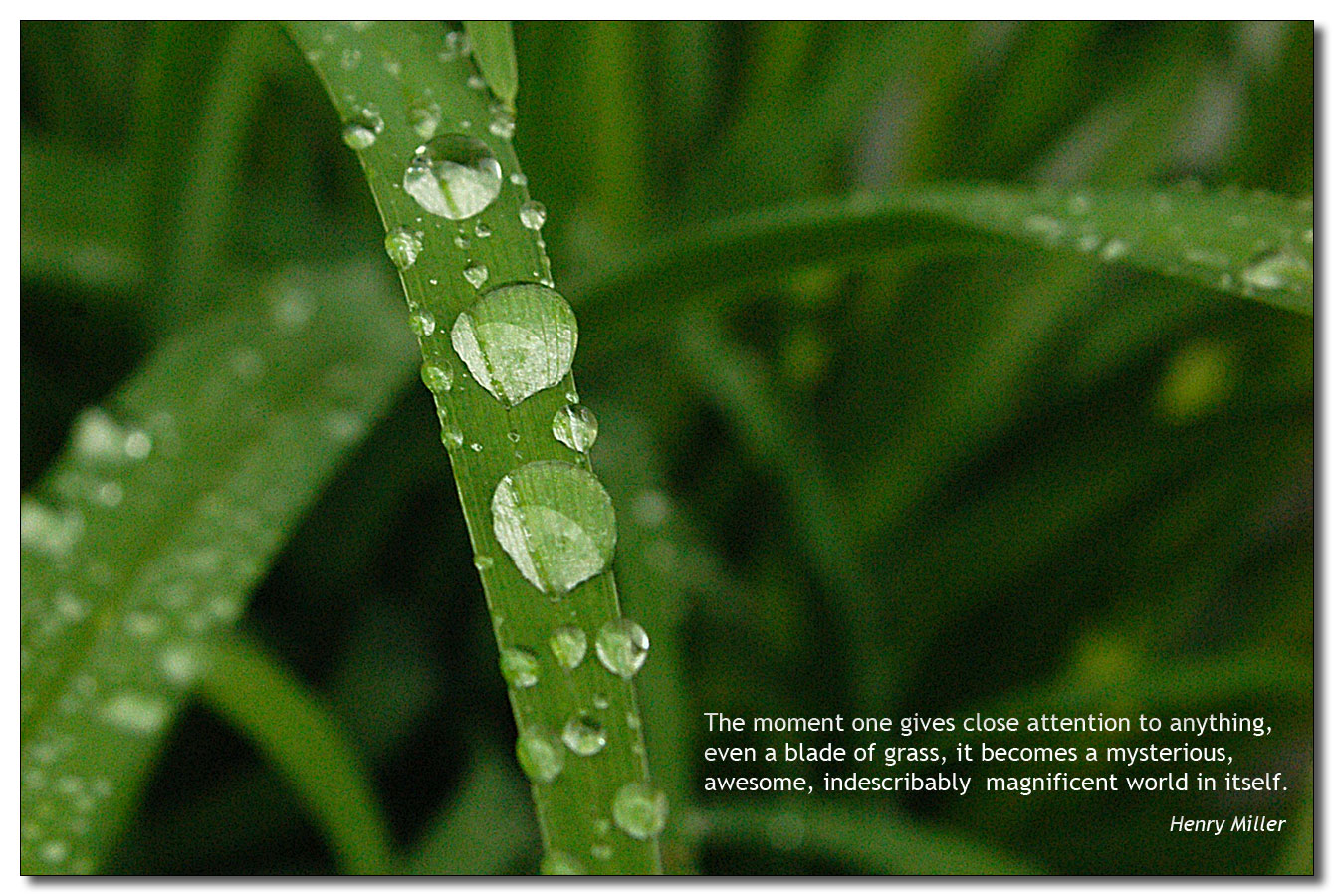
The moment one gives close attention to anything, even a blade of grass, it becomes a mysterious, awesome, indescribably magnificent world in itself.
Henry Miller (1891-1980), Quoted in Wisdom for the Soul, ed Larry Chang, 2006, p. 64. Attributed in multiple sources but not verified in a primary source.
Gallery of Nature Quotes
Nature is a vast tablet, inscribed with signs, each of which has its own significancy, and becomes poetry in the mind when read; and geology is simply the key by which myriads of these signs, hitherto indecipherable, can be unlocked and perused, and thus a new province added to the poetical domain.
Hugh Miller (1802-1856) – Sketch Book of Popular Geology, 1860, p. 87.
In contemplation of created things, by steps we may ascend to God.
John Milton (1608-1674) – Paradise Lost, Book V, Line 511, p314.
In those vernal seasons of the year, when the air is calm and pleasant, it were an injury and sullenness against nature not to go out and see her riches, and partake in her rejoicing with heaven and earth.
John Milton (1608-1674) – Tractate of Education (1644) Facsimile Reprint from the edition of 1673, By Oscar Browning, Cambridge University Press, 1883, p.21
Let us a little permit Nature to take her own way; she better understands her own affairs than we.
Michael de Montaigne (1533-1592) – Works of Michael de Montaigne Comprising His Essays, Journey Into Italy, and Letters, with Notes from All the Commentators, Biographical and Bibliographical Notices, Etc · Volume 3 By Michel de Montaigne, William Hazlitt, Orlando Williams Wight · 1859, p431.
When we try to pick out anything by itself, we find it hitched to everything else in the Universe.
Variant: When we try to pick out anything by itself we find that it is bound fast by a thousand invisible cords that cannot be broken, to everything in the universe.
Misquoted as: When one tugs at a single thing in nature; he finds it attached to the rest of the world.
John Muir (1838-1914) – My First Summer in the Sierra (1911), p 84. Variant: John Muir written in his journal for July 27, 1869.
Thousands of tired, nerve-shaken, over-civilized people are beginning to find out that going to the mountain is going home; that wildness is a necessity; and that mountain parks and reservations are useful not only as fountains of timber and irrigating rivers, but as fountains of life.
John Muir (1838-1914) – Our National Parks, 1901, Chapter 1, page 1.
As long as I live, I’ll hear waterfalls and birds and winds sing. I’ll interpret the rocks, learn the language of flood, storm, and the avalanche. I’ll acquaint myself with the glaciers and wild gardens, and get as near the heart of the world as I can.
John Muir (1838-1914) – Quoted in Son of the Wilderness, The Life of John Muir, Linnie Marsh Wolfe, reprint ed., Madison: University of Wisconsin Press, 1978, p144, Undated journal entry.
When we contemplate the whole globe as one great dewdrop, striped and dotted with continents and islands, flying through space with other stars all singing and shining together as one, the whole universe appears as an infinite storm of beauty.
John Muir (1838-1914) – Travels in Alaska Boston and New York, Houghton Mifflin, (1915), p6.
Everybody needs beauty as well as bread, places to play in and pray in, where nature may heal and give strength to body and soul alike.
John Muir (1838-1914) – The Yosemite, New York, The Century Co (1912), p 256.
Walk away quietly in any direction and taste the freedom of the mountaineer. Camp out among the grasses and gentians of glacial meadows, in craggy garden nooks full of nature’s darlings. Climb the mountains and get their good tidings. Nature’s peace will flow into you as sunshine flows into trees. The winds will blow their own freshness into you and the storms their energy, while cares will drop off like autumn leaves. As age comes on, one source of enjoyment after another is closed, but nature’s sources never fail.
John Muir (1838-1914) – Our National Parks (1901), p 56.
Few are altogether deaf to the preaching of pine trees. Their sermons on the mountains go to our hearts; and if people in general could be got into the woods, even for once, to hear the trees speak for themselves, all difficulties in the way of forest preservation would vanish.
John Muir (1838-1914)- “The National Parks and Forest Reservations Address to Sierra Club meeting,” Sierra Club Bulletin Vol. 1, No. 7 (January 1896) p.282-283.
This grand show is eternal. It is always sunrise somewhere; the dew is never all dried at once; a shower is forever falling; vapor ever rising. Eternal sunrise, eternal sunset, eternal dawn and gloaming, on seas and continents and islands, each in its turn, as the round earth rolls.
John Muir (1838-1914) – John of the Mountains: The Unpublished Journals of John Muir, Ed. Linnie Marsh Wolfe, 1938, p 438.
How lavish is Nature building, pulling down, creating, destroying, chasing every material particle from form to form, ever changing, ever beautiful.
John Muir (1838-1914) – My First Summer in the Sierra (1911), Chapter 10, p. 318-319.a
People from a planet without flowers would think we must be mad with joy the whole time to have such things about us.
Iris Murdoch (1919-1999) – A Fairly Honourable Defeat, (2001) p 170, 1970.
We do not inherit the earth from our ancestors, we borrow it from our children.
Navajo Proverb
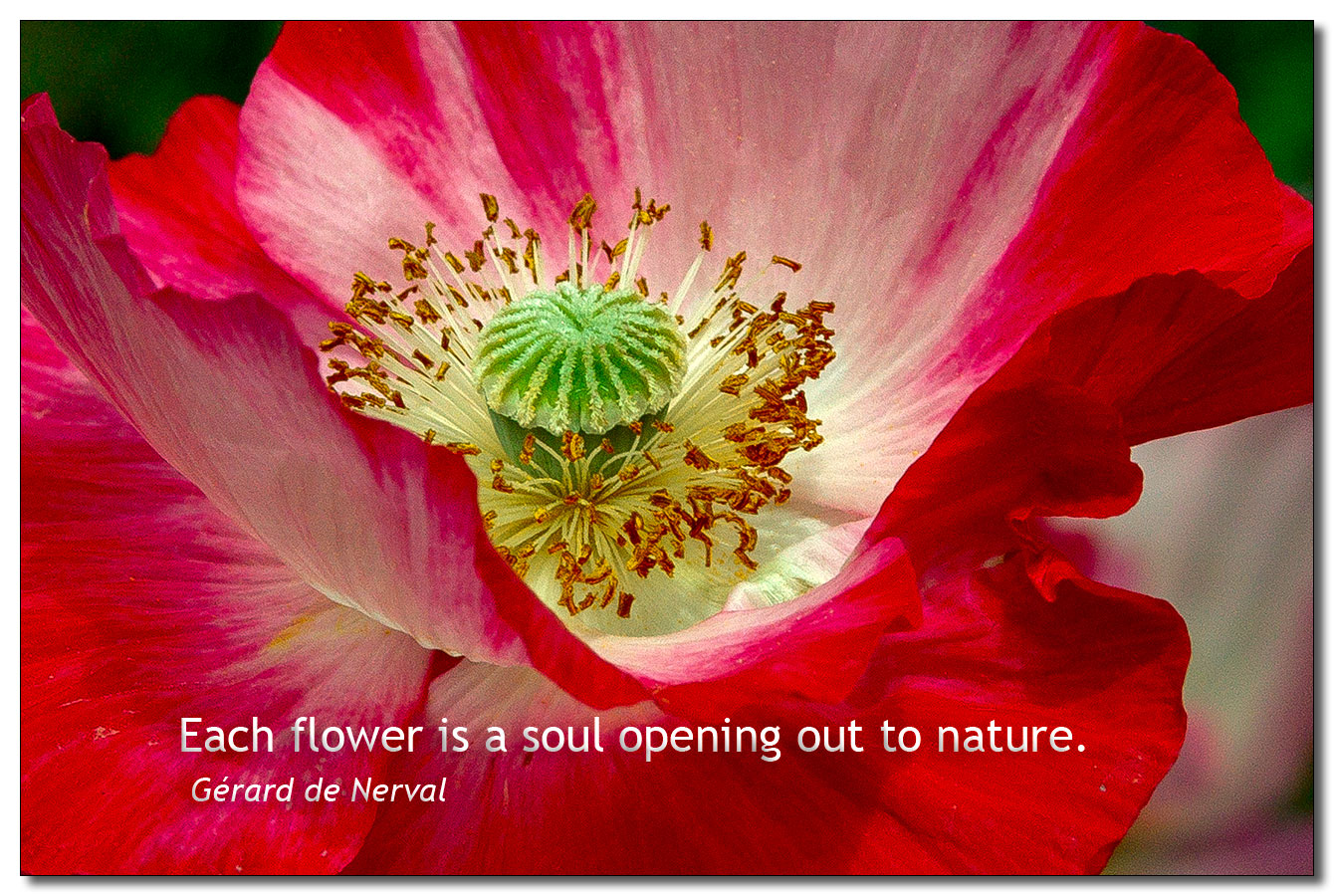
Each flower is a soul blossoming out to nature.
Gérard de Nerval (1808-1855) -From the poem “Golden Lines” (1854) in News of the Universe: Poems of Twofold Consciousness, Translated by Robert Bly, Sierra Club Books, San Francisco, 1980, p.38.
Gallery of Nature Quotes
I do not know what I may appear to the world, but to myself I seem to have been only like a boy playing on the seashore, and diverting myself in now and then finding a smoother pebble or a prettier shell than ordinary, whilst the great ocean of truth lay all undiscovered before me.
Isaac Newton (1643-1727) – Memoirs of the Life, Writings, and Discoveries of Sir Isaac Newton (1855) by Sir David Brewster (Volume II. Ch. 27 p.407)
Whence is it that Nature doth nothing in vain; and whence arises all that Order and Beauty which we see in the World?
Isaac Newton (1643-1727) Opticks, 4th Ed, Corrected, London, 1730, p344. Newton is quoting Aristotle’s axiom.
Nature is very consonant and conformable to herself
Isaac Newton (1643-1727) Opticks, 4th Ed, Corrected, London, 1730, p372.
The forest is the poor man’s overcoat.
New England Proverb
We mention nature and forget ourselves in it: we ourselves are nature, quand même—. As a result, nature is something entirely different from what comes to mind when we invoke its name.
Friedrich Nietzsche (1844-1900) – Friedrich Nietzsche, Sämtliche Werke: Kritische Studienausgabe, vol. 2, p. 696, eds. Giorgio Colli and Mazzino Montinari, Berlin, de Gruyter (1980). The Wanderer and His Shadow, aphorism 327, “Forgotten Nature,” (1880). quand même (French) means “nonetheless.”
To touch the earth is to have harmony with nature.
Oglala Sioux Proverb
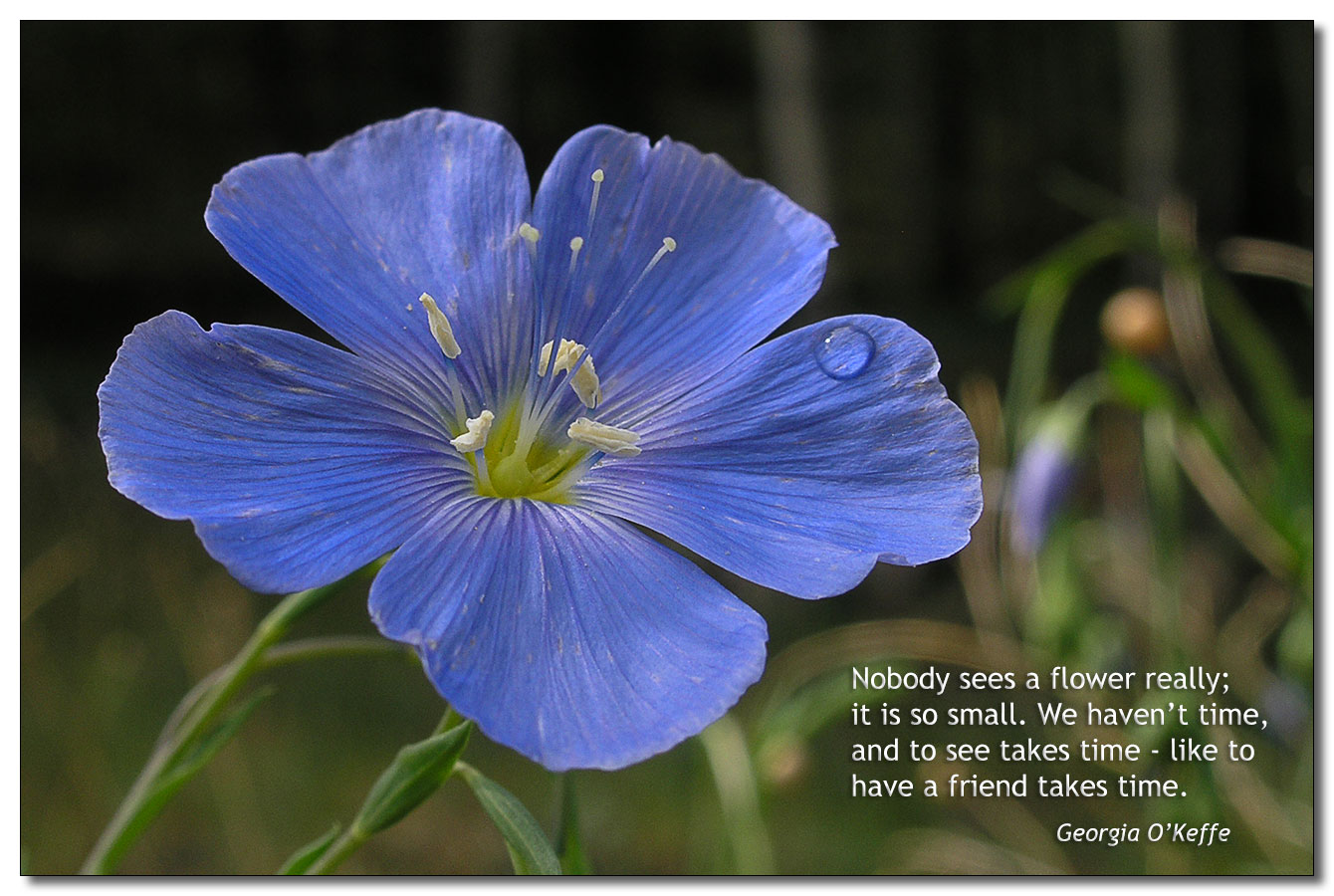
Nobody sees a flower really; it is so small. We haven’t time, and to see takes time – like to have a friend takes time.
Georgia O’Keffe (1887-1986)- Contribution (1939) to the exhibition catalogue An American place (1944)
Gallery of Nature Quotes
When you take a flower in your hand and really look at it, it’s your world for the moment. I want to give that world to someone else. Most people in the city rush around so, they have no time to look at a flower. I want them to see it whether they want to or not.
Georgia O’Keffe (1887-1986) – Quoted in the New York Post, May 16, 1946
Whoever you are, no matter how lonely,
the world offers itself to your imagination,
calls to you like the wild geese, harsh and exciting —
over and over announcing your place
in the family of things.
Mary Oliver (1935 – ) “Wild Geese,” Wild Geese, Selected Poems, Bloodaxe World Poets, October, 2004
Beauty is composed of many things and never stands alone. It is part of horizons, blue in the distance, great primeval silences, knowledge of all things of the earth… It is so fragile it can be destroyed by a sound or thought. It may be infinitesimally small or encompass the universe itself. It comes in a swift conception wherever nature has not been disturbed.
Sigurd F. Olson (1899-1982) “The Singing Wilderness,” Reflections of the North Country, Knopf Doubleday Publishing Group, 2012.
—Nature, the great Moloch, which exacts a frightful tax of human blood, sparing neither young nor old; taking the child from the cradle, the mother from her babe, and the father from the family.
Sir William Osler (1849-1919) – “The Doctor and Nurse,” in A͠equanimitas: with other addresses to medical students, nurses and practitioners of Medicine, Blakiston’s Son & Co., Philadelphia, 1905, p. 18.
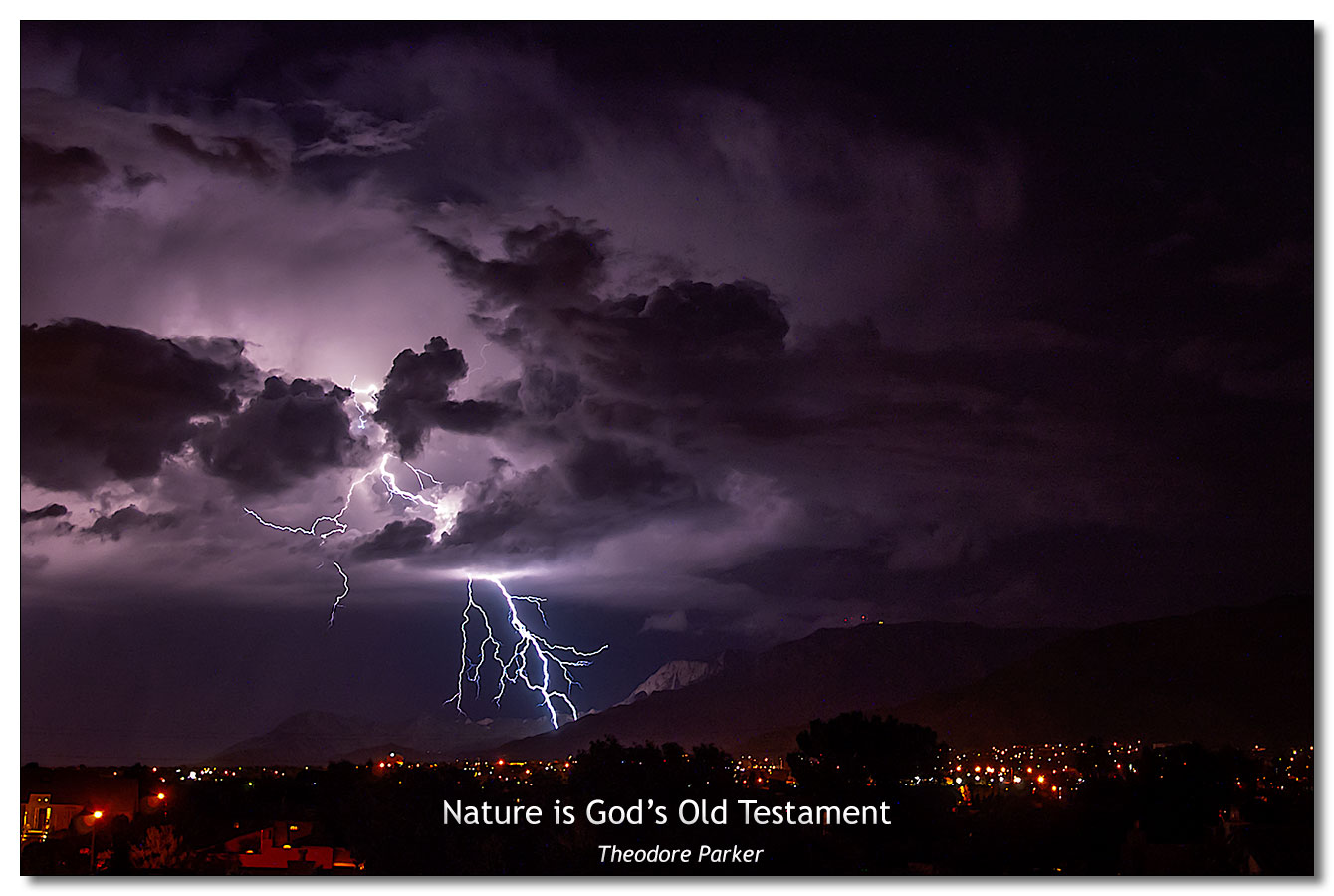
Nature is God’s Old Testament.
Theodore Parker (1810-1860) – Quoted in Edge-Tools of Speech, Ed. Maturin M. Ballou, Riverside Press, 1886, p 325
Gallery of Nature Quotes
It seems strange that a butterfly’s wing should be woven up so thin and gauzy in this monstrous loom of nature, and be so delicately tipped with fire from such a gross hand and rainbowed all over in such a storm of thunderous elements…The marvel is that such great forces do such nice work.
Theodore Parker (1810-1860) Lessons from the World of Matter and The world of Man, London, Trubner & Co., 1865, p29.
Let man then contemplate the whole of nature in her full and grand majesty… No idea approaches it. We may enlarge our conceptions beyond all imaginable space; we only produce atoms in comparison with the reality of things. . . It is an infinite sphere, the center of which is everywhere, the circumference nowhere.
Blaze Pascal – Pensées (1669) Section II, 72. The quote in bold is attributed to Empedocles. Pascal is said to have read it in Mlle de Gournay’s preface to her edition of Montaigne’s Essais. See note 30 here.
Nature imitates herself. A seed grown in good ground brings forth fruit. A principle instilled into a good mind brings forth fruit. Numbers imitate space, which is of a different nature. All is made and led by the same master, root, branches, and fruits; principles and consequences.
Blaise Pascal (1623-1662) – Pensées (1669) Ch II, 119 Translated by W.F. Trotter.
Nature has some perfections to show that she is the image of God, and some defects to show that she is only His image.
Blaise Pascal (1623-1662) – Pensées (1669) Section VIII, 579, Translated by W. F. Trotter.
For nature is an image of Grace, and visible miracles are images of the invisible.
Blaise Pascal (1623-1662)- Pensées (1669) Section X – 674.
The least motion affects all nature; the whole ocean is altered by a pebble.
Blaise Pascal (1623-1662) – Thoughts on Religion and Philosophy, “Thoughts on Miracles,” XCVI, Simpkin, Marshall, Hamilton, Adams & Co, London, 1894, p. 196
When we see an effect happen always in the same manner, we infer that it takes place by a natural necessity; as, for instance, that the sun will rise tomorrow; but nature often deceives us, and will not submit to its own rules.
Blaise Pascal (1623-1662) – Thoughts on Religion and Philosophy, “The Weakness of Man,” XXII, Simpkin, Marshall, Hamilton, Adams & Co, London, 1894, p. 22.
I am in the utmost perplexity, and have wished a hundred times, that if there is a God, nature would manifest him without ambiguity, and that if there is not, every imaginary sign of his existence might vanish: in short, let nature speak distinctly, or be totally silent, and I shall know what course to take.
Blaise Pascal (1623-1662) – Thoughts on Religion and Philosophy, “Reflections of a Man who is weary of Searching after God by the Light of nature, and is beginning to study the Scriptures,” I, Simpkin, Marshall, Hamilton, Adams & Co, London, 1894, p.86.
The secrets of nature are concealed; her agency is perpetual, but we do not always discover its effects; time reveals them from age to age; and although she is always the same in herself, she is not always equally well known.
Blaise Pascal (1623-1662) – Thoughts on Religion and Philosophy, “On the Influence of Authority in Philosophy,” Simpkin, Marshall, Hamilton, Adams & Co, London, 1894, p.240.
The universe is full of magical things patiently waiting for our wits to grow sharper.
Eden Philpotts (1862-1960) – A Shadow Passes, 1919, p 17.
The Moor was mist-laden and colorless. The children of sunshine slept while nature worked in black and white, and every shade of pearl, cobweb and sulky lead went into her autumn picture.
Eden Philpotts (1862-1960) – A Shadow Passes, 1919, p 64.
The day, water, sun, moon, night—I do not have to purchase these things with money.
Plautus (2254 BC- 184 BC) – The Comedy of Asses (3rd Cent. BC)
Nature without learning is like a blind man; learning without Nature, like a maimed one; practice without both, incomplete. As in agriculture a good soil is first sought for, then a skillful husbandman, and then good seed; in the same way nature corresponds to the soil, the teacher to the husbandman, precepts and instruction to the seed.
Plutarch (46-127) – Plutarch, “On the Training of Children,” Moralia,
For if nature be not improved by instruction , it is blind ; if instruction be not assisted by nature , it is maimed ; and if exercise fail of the assistance of both , it is imperfect as to the attainment of its end.
Plutarch (46-127) – Plutarch, “On the Training of Children,” Plutarch’s Miscellanies and Essays, Vol I, 6th ed, Boston, 1898
A lawn is nature under totalitarian rule.
Michael Pollan (1955) Second Nature A Gardener’s Education, Grove Press, 1991, p48
Multitudes of people are beauty blind to the outdoor pictures. I doubt if one in a hundred begin to take in the beauty visible on even a short walk in city or country.
Delia Lyman Porter – (1858-1933) “The Beauty Blind,,” An Anti-worry Recipe and Other Stories, The American Tract Society 1905, p59.
The more we study nature the grander does she appear. Science, by penetrating her secrets, often shows us the hidden and imposing forces exist where we only see inertia.
Felix Archimede Pouchet, MD (1800-1872) – The Universe, Or, The infinitely Great and the Infinitely Little, The circulation in Plants, Chapter II, Scribner, NY, 1873, p. 414
Natura abhorret vacuum,
Nature abhors a vacuum.
Francois Rabelias (1494-1553) – Gargantua and Pantagruel, bk 1, ch 5 (1534), trans. J.M Cohen, 1955.
Painting is the grandchild of nature. It is related to God.
Rembrandt (1606-1669) – Quoted in Rembrandt Drawings (1975) by Paul Némo, as translated by David Macrae
Nature declares herself in her works. What exists beyond her domain, if anything, becomes necessarily a matter of faith or imagination.
Harvey Rice (1800-1891) – Nature and Culture, Ch 1, University Press, Wilson and Son, Cambridge, 1889, p11.
Nature has written her own history in the hills and in the rocks, in the depths of the sea, and in the stars of heaven, leaving nothing for man to do except to read the record, and accept its truthful teaching
Harvey Rice (1800-1891) – Nature and Culture, Ch 1, University Press, Wilson and Son, Cambridge, 1889, p14.
Though Nature has made for man ample provision, she requires him not only to help himself, but to take care of himself. Nor does she give him formal notice to keep out of harm’s way when she wishes to break up the earth’s crust and re-cast it, but proceeds at once. She may sink or elevate a continent at a blow, or she may do it so by slow degrees.
Harvey Rice (1800-1891) – Nature and Culture, Ch 1, University Press, Wilson and Son, Cambridge, 1889, p25.
Nature seems to delight in creating the wonderful as well as the beautiful, and often combines both in the same exhibition.
Harvey Rice (1800-1891) – Nature and Culture, Ch 1, University Press, Wilson and Son, Cambridge, 1889, p36.
In Nature there is nothing constant but change.
Harvey Rice (1800-1891) – Nature and Culture, Ch 1, University Press, Wilson and Son, Cambridge, 1889, p45.
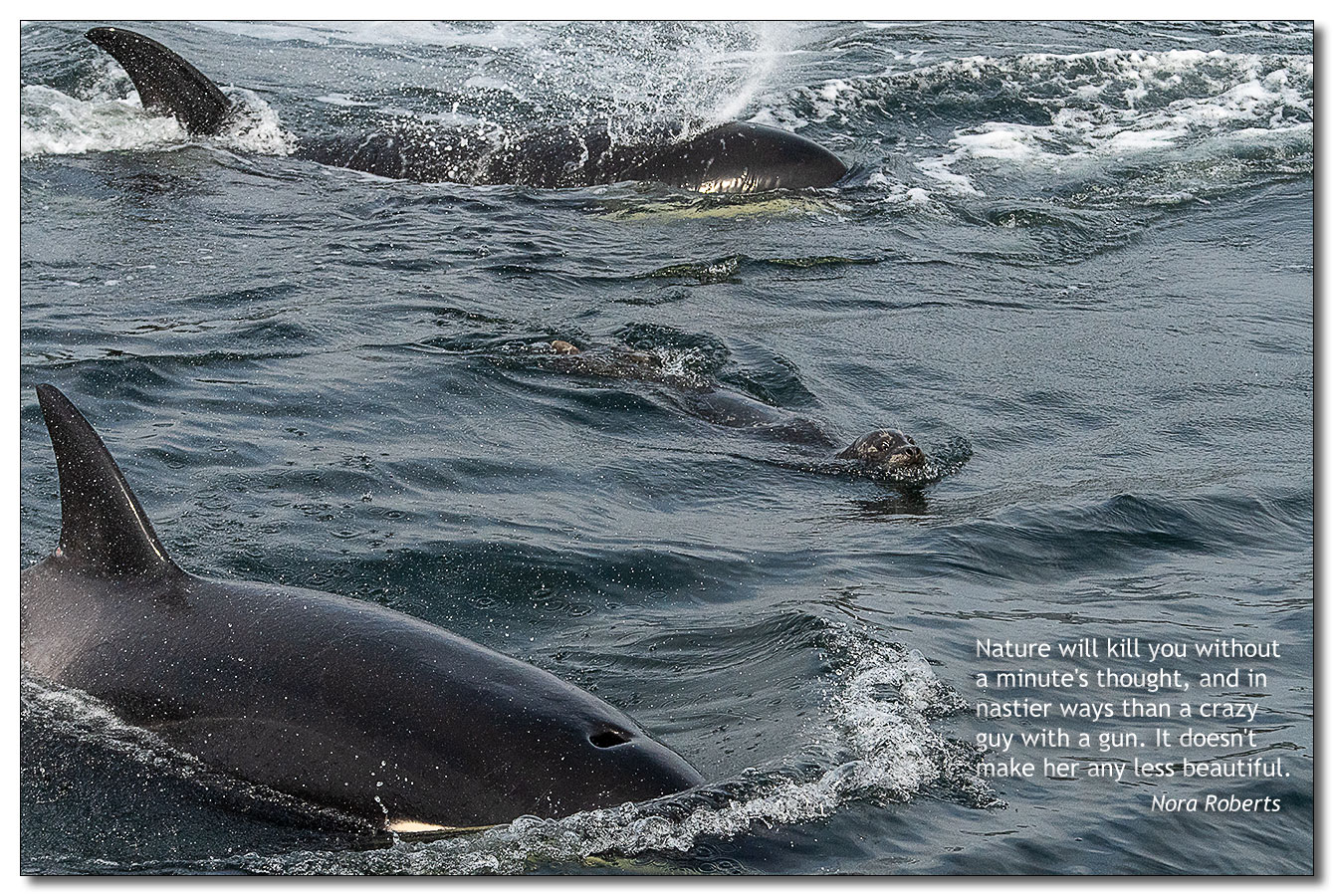
Nature will kill you without a minute’s thought, and in nastier ways than a crazy guy with a gun. It doesn’t make her any less beautiful.
Nora Roberts (1950 -) – Northern Lights, Penguin Group, NY, 2004, p. 534
Gallery of Nature Quotes
On the path that leads to Nowhere
I have sometimes found my soul!
Corinne Roosevelt Robinson (1861-1933) – From the Poem, “The Path That Leads Nowhere,” in The Poems of Corinne Roosevelt Robinson. New York: Charles Scribner’s Sons, 1921, p207.
Nature never deceives us; it is always we who deceive ourselves.
Jean-Jacques Rousseau (1712-1778), “On Education,” Emile, 1762, p185.
Everything made by man may be destroyed by man; there are no ineffaceable characters except those engraved by nature; and nature makes neither princes nor rich men nor great lords.
Jean-Jacques Rousseau (1712-1778), Emile, l, iii, 1762.
Though nature is constantly beautiful, she does not exhibit her highest powers of beauty constantly, for then they would satiate us and pall upon our senses. It is necessary to their appreciation that they should be rarely shown. Her finest touches are things which must be watched for; her most perfect passages of beauty are the most evanescent.
John Ruskin (1819-1900) – Modern Painters Library Edition (Vol 1), Part II, Section 1, Chapter IV, George Allen, London (p.156), 1903
Nature is always mysterious and secret in her use of means; and art is always likest her when it is most inexplicable.
John Ruskin (1819-1900) – Modern Painters Library Edition (Vol 1), Section II, Chapter II, p 123, George Allen, London, 1903
Nature is painting for us, day after day, pictures of infinite beauty, if only we have the eyes to see them.
John Ruskin (1819-1900) – attributed in numerous sources without citation.
My entire delight was in observing without being myself noticed,— if I could have been invisible, all the better. . . to be in the midst of it, and rejoice and wonder at it, and help it if I could, — happier if it needed no help of mine, — this was the essential love of Nature in me, this the root of all that I have usefully become, and the light of all that I have rightly learned.
John Ruskin (1819-1900)- Praeterita, volume I, chapter IX (1885-1889) p 252-253.
Destruction, hence, like creation, is one of Nature’s mandates.
Marquis de Sade (1740-1814) – Dolmancé, in Philosophy in the Bedroom, “Dialogue the Fifth,” (1795). Real name: Comte Donatien-Alphonse-François.
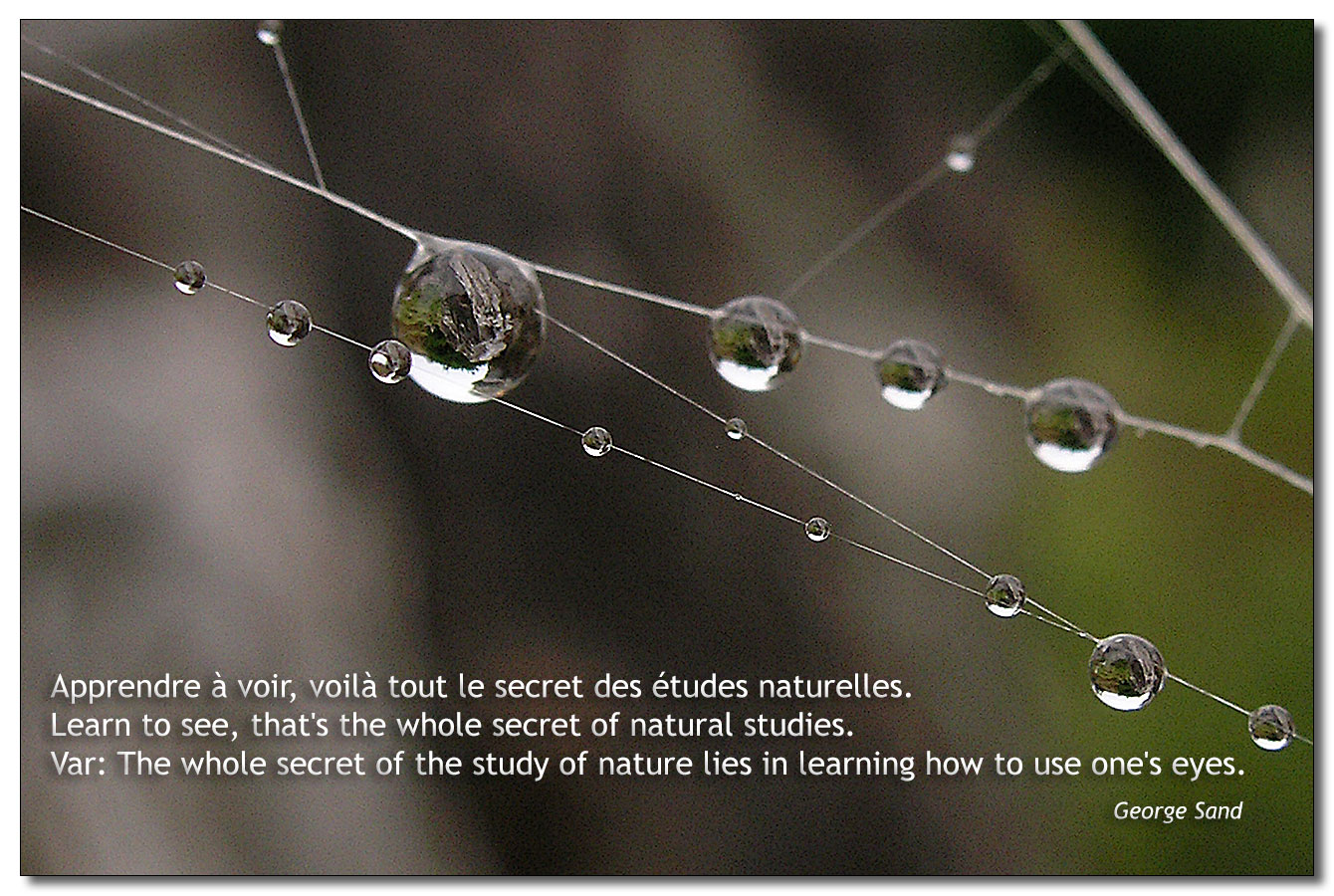
Apprendre à voir, voilà tout le secret des études naturelles.
Learn to see, that’s the whole secret of natural studies. Variant: The whole secret of the study of nature lies in learning how to use one’s eyes.
George Sand pseudonym for Amantine Lucile Aurore Dupin, later Baroness Dudevant (1804-1876) – Nouvelles Lettres d’un Voyageur, 1869. p.51.
Gallery of Nature Quotes
Beauty is a pledge of the possible conformity between the soul and nature, and consequently a ground of faith in the supremacy of the good.
George Santayana (1863-1952) – The Sense of Beauty, 1896, p 279.

Nature—wild nature—dwells in gardens just as she dwells in the tangled woods, in the deeps of the sea, and on the heights of the mountains; and the wilder the garden, the more you will see of her there.
Herbert Ravenel Sass (1884-1958) Adventures in Green Places, G. Putnam’s sons (1935), p. 134.
Gallery of Nature Quotes
Even now, nature is the only flame, on which the poetic spirit feeds; from it alone it draws all its power, to it alone it speaks even in the artificial, in the man engaged in culture.
Friedrich von Schiller (1759-1805) – On Naïve and Sentimental Poetry. 1795.
The deeper we look into nature, the more we recognize that it is full of life, and the more profoundly we know that all life is a secret and that we are united with all life that is in nature. Man can no longer live for himself alone. We realize that all life is valuable, and that we are united to all this life.
Albert Schweitzer (1875-1965 )- The Spiritual Life (1947).
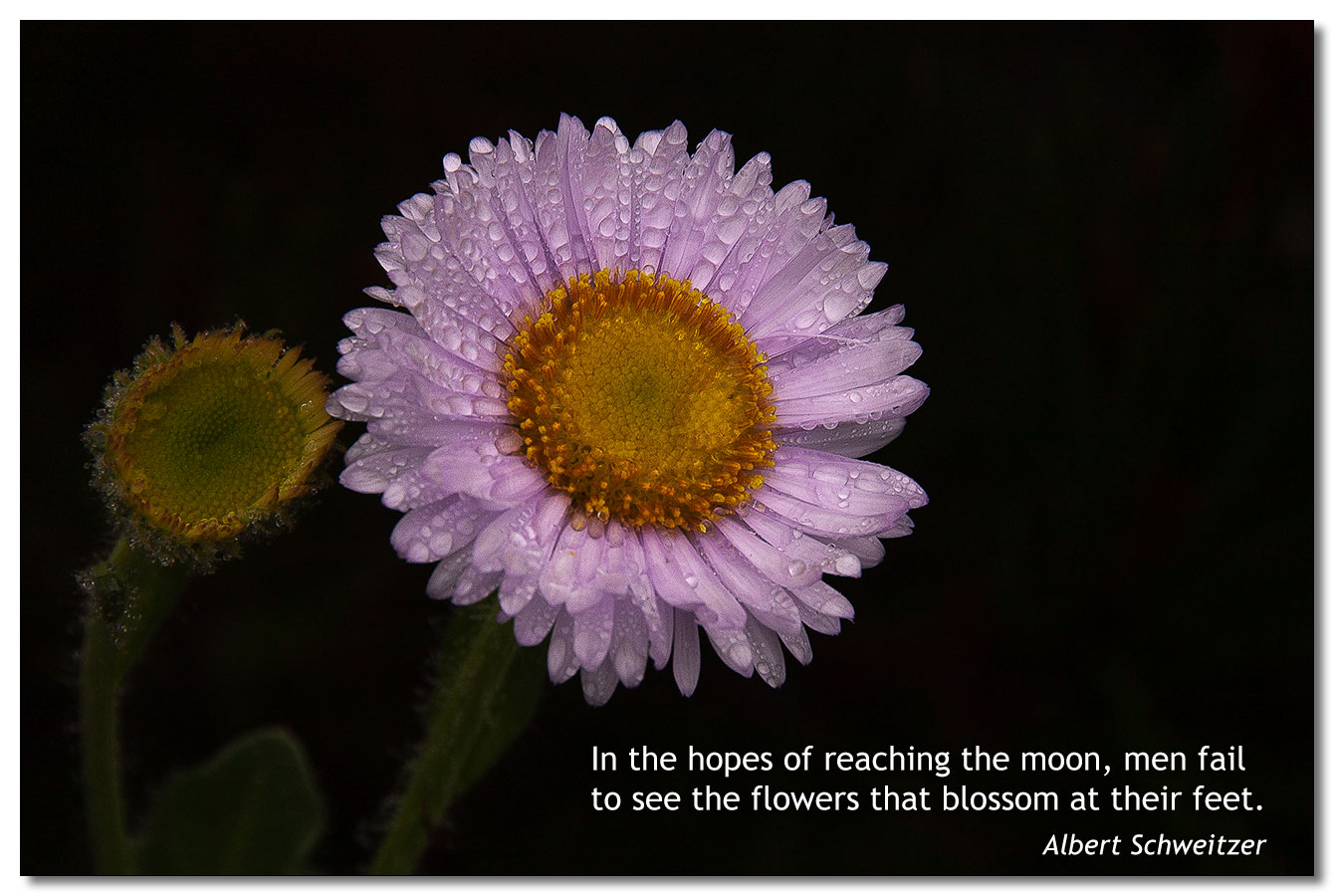
In the hopes of reaching the moon, men fail to see the flowers that blossom at their feet.
Albert Schweitzer (1875-1965 ) – The Words of Albert Schweitzer, Norman Cousins, 1984, p36
Gallery of Nature Quotes
Nature ever provides for her own exigencies.
Seneca The Younger (Lucius Annaeus Seneca)(4 BC – AD 65) – Attributed and Quoted in Treasury of Thought Forming An Encyclopedia of Quotations, Maturin M. Ballou ed, 1894, p359.
True wisdom consists in not departing from nature and in molding our conduct according to her laws and model.
Seneca The Younger (Lucius Annaeus Seneca)(4 BC – AD 65) – “Of a Happy Life,” Book III, Bohn’s Classical Library Edition of L. Annaeus Seneca, Minor Dialogs Together with the Dialog “On Clemency“; George Bell and Sons, London, 1900
Omnis ars naturae imitatio est.
All art is but imitation of nature.
Seneca The Younger (Lucius Annaeus Seneca)(4 BC – AD 65) -Letter LXV: On the first cause, line 3.
Natura semina scientiæ nobis dedit, scientiam non dedit
Nature has given us the seeds of knowledge, not knowledge itself.
Seneca The Younger (Lucius Annaeus Seneca)(4 BC – AD 65) – Epistoloe Ad Lucilium (CXX)
Nature does not turn out her work according to a single pattern; she prides herself upon her power of variation…
Seneca The Younger (Lucius Annaeus Seneca) (4BCE-65AD) – Physical Science in the Time of Nero, Being a Translation of the Quaestiones Naturales of Seneca, Book VII, Chapter XXVII, MacMillan & Company, London, 1910, p. 301.
Nature does not reveal all her secrets at once. We imagine we are initiated in her mysteries: we are, as yet, but hanging around her outer courts.
Seneca The Younger (Lucius Annaeus Seneca) (4BCE-65AD) – Physical Science in the Time of Nero, Being a Translation of the Quaestiones Naturales of Seneca, Book VII, Chapter XXVII, MacMillan & Company, London, 1910, p. 306.
[In nature] all is managed for the best with perfect frugality and just reserve, profuse to none, but bountiful to all; never employing on one thing more than enough, but with exact economy retrenching the superfluous, and adding force to what is principal in everything.
Lord Shaftesbury [Anthony Ashley Cooper, 3rd Earl of Shaftesbury] (1671-1713) – Characteristics of Men, Manners, Opinions, Times, Ed. Klein, University of Nevada, 1999, p.282
One touch of nature makes the whole world kin.
William Shakespeare – Troilus and Cressida, Act III, Scene iii
The notion that Nature does not proceed by jumps is only one of the budget of plausible lies that we call classical education. Nature always proceeds by jumps. She may spend twenty thousand years making up her mind to jump; but when she makes it up at last, the jump is big enough to take us into a new age.
George Bernard Shaw (1856-1950) – “Back to Methuselah,” Conrad speaking, Part II, Constable & Co., London, 1921, p 81.
And all-sufficing nature can chastise
Those who transgress her law—she only knows
How justly to proportion to the fault
The punishment it merits.
Percy Bysshe Shelley (1792-1822) – Queen Mab, 3rd Edition, Canto 3, NY, 1842, p23.
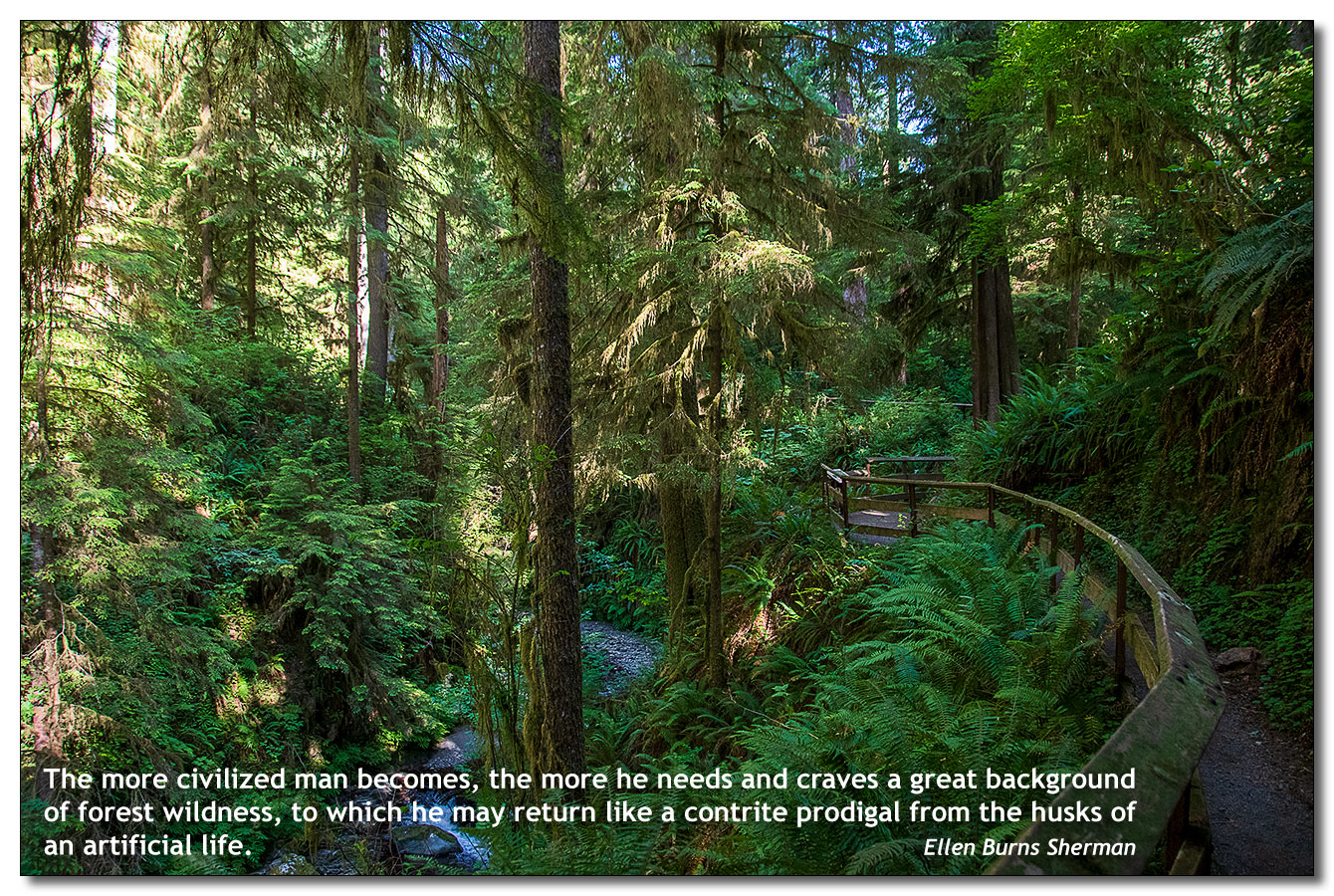
The more civilized man becomes, the more he needs and craves a great background of forest wildness, to which he may return like a contrite prodigal from the husks of an artificial life.
Ellen Burns Sherman – On the Manuscripts of God, Abingdon Press, NY, 1918, p. 96.
Gallery of Nature Quotes
When men have recognized that the forest is a great standing army, divinely appointed to protect the human race not only from drought, flood, and famine, but from their counterparts in the intellectual and spiritual world, perhaps some of the time and money now spent on battleships and destructive armies will be diverted to the maintenance of our beautiful and peaceful defenders, the trees.
Ellen Burns Sherman (1867-1956) – On the Manuscripts of God, Abingdon Press, NY, 1918, pp, 96-97,
If you watch how nature deals with adversity, continually renewing itself, you can’t help but learn.
Bernie Siegel M.D (1932 -) “Love: The WORK of the SOUL,” in Handbook for the Soul, Carson and Shield, Hatchett Book Group, 1995, Chapter 2.
Neither Miró nor Picasso. Signed by nature.
Sergio da Silva (1955 – ) – Water, Mirror of the World, United Nations Publications, 2006. p164.
Nature sometimes contrives to disconcert by reflecting the image of our creation.
Sergio da Silva (1955 – ) – Water, Mirror of the World, United Nations Publications, 2006, p148.
Throughout intimate association with the living things around us; we reach out beyond the narrow human sphere into the larger natural world that surrounds and sustains us.
Alexander Frank Skutch (1904-2004) – Nature through Tropical Windows, University of California Press, 1983, Preface, xiii.
If we look for its fiercer aspects, we have no difficulty convincing ourselves that nature is “red in tooth and claw.” Many of us, however prefer to contemplate its gentler side, its constructive activities, and thee peace, cooperativeness, and altruism we find there. This is what attracts us to nature, while the harsher side repels.
Alexander Frank Skutch (1904-2004) – Nature through Tropical Windows, University of California Press, 1983, p173
One of the most delightful spectacles that nature affords is a tropical tree profusely laden with fruits that brightly colored birds are eating in the sunshine.
Alexander Frank Skutch (1904-2004) – Nature through Tropical Windows, University of California Press, 1983, p173
Imitate Nature? Yes, when we cannot improve upon her. Admire Nature? Possibly, but be not blinded to her defects. Learn from Nature? We should sit humbly at her feet until we can stand erect and go our own way. Love Nature? Never! She is our treacherous and unsleeping foe, ever to be feared and watched and circumvented, for at any moment and in spite of all our vigilance she may wipe out the human race by famine, pestilence or earthquake and within a few centuries obliterate every trace of its achievement.
Edwin Emery Slossin (1865-1919) – Creative Chemistry, Chapter 1, The Century Co., NY, 1919, p. 10.
Civilized man, enthroned in his citadel and defended by all the forces of nature that he has brought under his control, is after all in the same situation as a savage, shivering in the darkness beside his fire, listening to the pad of predatory feet, the rustle of serpents and the cry of birds of prey, knowing that only the fire keeps his enemies off, but knowing too that every stick he lays on the fire lessons his fuel supply and hastens the inevitable time when the beasts of the jungle will make their fatal rush.
Edwin Emery Slossin (1865-1919) – Creative Chemistry, Chapter 1, The Century Co., NY, 1919, p. 11.
Nature is not a place to visit, it is home.
Gary Snyder (1930 – ) – The Practice of the Wild, “The Etiquette of Freedom,” Counterpoint, Berkeley, CA, 1990, p 7.
Nature is orderly. That which appears to be chaotic in nature is only a more complicated kind of order.
Gary Snyder (1930 – ) – The Practice of the Wild, “Good, Wild, Sacred,” Counterpoint, Berkeley, CA, 1990, p 100.
…Nature has set no end before herself, and that all final causes are nothing but human fictions.
Baruch de Spinoza (1632-1677) – de Spinoza, Ethics, Part 1, Appendix, Hafner Press, 1949, p74.
In Nature all is common, and no use is base. She keeps no selected elements done up in gilt papers for sensitive people.
Joel Dorman Steele (1836-1886) – A Fourteen Weeks Course in Chemistry, A.S.Barnes & Co., NY, NY, 1870 Conclusion (p223),
We travel together, passengers on a little space ship, dependent upon its vulnerable reserves of air and soil, all committed for our safety to its security and peace, preserved from annihilation only by the care, the work, and I will say the love we give our fragile craft. We cannot maintain it half fortunate and half miserable, half confident, half despairing, half slave — to the ancient enemies of man — and half free in a liberation of resources undreamed-of until this day. No craft, no crew can travel safely with such vast contradictions. On their resolution depends the survival of us all.
Adlai Stevenson II (1900-1965) – Speech to the UN Economic and Social Council, Geneva, Switzerland (9 July 1965)
Nature is indifferent to the survival of the human species, including Americans.
Adlai Stevenson II (1900-1965) – Radio address, September 29, 1952
But indeed, it is not so much for its beauty that the forest makes a claim upon men’s hearts, as for that subtle something, that quality of air that emanation from old trees, that so wonderfully changes and renews a weary spirit.
Robert Louis Stevenson (1850-1894) – Essays of Travel and in the Art of Writing, Scribner’s, NY, (1921), Forest Notes, p191.
The seeming significance of nature’s appearances, their unchanging strangeness to the senses, and the thrilling response which they awaken in the mind of man . . . If we could only write near enough to the facts, and yet with no pedestrian calm, but ardently, we might transfer the glamour of reality direct upon our pages.
Robert Louis Stevenson (1850-1894) – The Novels and Tales of Robert Louis Stevenson, Character and Opinions (p. 134) Scribner’s Sons, NY, NY, 1902
Nature is man’s teacher.
She unfolds her treasures to his search,
unseals his eye, illumes his mind,
and purifies his heart;
an influence breathes from all the sights and sounds
of her existence.
Alfred Billings Street (1811-1881) – Drawings and Tintings, NY, 1844, p4.
There is no boon in nature. All the blessings we enjoy are the fruits of labor, toil, self-denial, and study.
William Graham Sumner (1840-1910) – “There is no Boon in Nature,” Earth Hunger and Other Essays, Yale Univ. Press,1912, p.238
Nature Quotes M-S. For other pages, click the links below
- David Alan
- Last Updated September 28, 2026